50 Years Of Trust | Engineering The Next Energy ERA
50 Years Of Trust | Engineering The Next Energy ERA
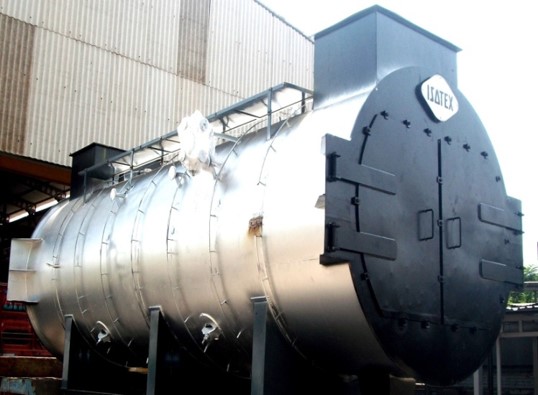
WHRB | Heat Recovery Steam Generators (HRSG) | Exhaust Gas Boilers (EGB)
Every Degree Lost is Money Wasted. We Engineer the Recovery.
In most industrial facilities, a significant portion of the thermal energy generated in furnaces, kilns, engines, reactors, and combustion chambers escapes into the atmosphere as hot exhaust gas — unrecovered, unproductive, and expensive. Isotex Global’s Waste Heat Recovery Boilers (WHRB) transform this lost energy into a reliable, continuous supply of process steam or hot water, directly reducing your fuel consumption, cutting your carbon footprint, and shortening your energy payback period.
With nearly five decades of thermal engineering experience and over 10,000 installations across 75+ countries, Isotex brings the depth of field-proven design to every waste heat recovery project — from compact exhaust gas boilers on diesel gensets to large-scale heat recovery systems for chemical reactors, sponge iron kilns, cement preheaters, and incineration systems.
Each Isotex WHRB is engineered to order. We study your heat source profile — temperature, flow, composition, dust loading, and variability — then design a heat recovery system that maximises energy capture without compromising the performance of your primary process equipment.
A Waste Heat Recovery Boiler is a pressure vessel system positioned downstream of a heat-generating industrial process. Rather than burning additional fuel to raise steam, a WHRB intercepts the hot exhaust gases or process off-gases from an existing source and passes them through a series of heat transfer surfaces — superheater, evaporator, economiser, and air preheater — progressively extracting thermal energy and converting it into steam, hot water, or thermal oil at the desired pressure and temperature.
Depending on the heat source and steam requirement, Isotex configures the WHRB with or without supplementary firing — where an auxiliary burner adds controlled heat to achieve a desired steam output even during periods of reduced process load or variable exhaust gas temperature. This flexibility ensures continuous steam availability without dependence on a standalone boiler.
| Operating Principle | - |
|---|---|
Heat Extraction |
Hot exhaust gases pass over tube bundles transferring heat to water / steam on the tube side or shell side depending on design |
Steam Generation |
Feed water is preheated in the economizer, evaporated in the steam drum circuit, and superheated to the required process or turbine temperature |
Supplementary Firing |
Optional duct burners or forced-draft burners boost steam output when waste heat quantity is insufficient or process load fluctuates |
Modular Heat Train |
Superheater > Evaporator > Economizer > Air Preheater — arranged to maximize heat recovery at each temperature level before final gas exit |
Isotex designs and supplies Waste Heat Recovery Boilers for a wide spectrum of industrial heat sources. Each product type is engineered specifically for the gas composition, temperature profile, dust characteristics, and operational pattern of the host process:
WHRB for Diesel & Gas Engine Exhaust (Exhaust Gas Boiler — EGB)
Diesel / gas engine exhaust at 350–550°C
2 TPH to 30 TPH
6 to 45 kg/cm² (g)
Saturated or superheated
Diesel generating sets, gas engines, and turbine exhausts discharge large volumes of hot flue gas. Isotex Exhaust Gas Boilers (EGB) are designed as horizontal or vertical serpentine coil / fin-tube heat exchangers mounted directly on the exhaust stack. The generated steam is used for process heating, absorption chillers (for air-conditioning), or fed into the plant steam header — directly reducing fired boiler load and fuel cost. Bare tube and extended surface (fin tube) options are available based on gas cleanliness and pressure drop constraints.
WHRB for Chemical & Petrochemical Process Off-Gases
Reactor off-gases, converter exit gases, oxidation unit exhaust
5 TPH to 130 TPH
Up to 90 kg/cm² (g)
Up to 520°C
Exothermic reactions in sulphuric acid plants, nitric acid plants, catalytic oxidation units, and refinery process streams generate large quantities of high-temperature gas that must be cooled before downstream treatment. Isotex configures fire-tube or water-tube WHRBs to recover this energy as high-pressure process steam, simultaneously serving the dual function of energy recovery and gas cooling for downstream catalyst beds or absorbers. Designs accommodate corrosive gas compositions including SO₂, NOₓ, and chlorine-bearing gases with appropriate material selection.
WHRB for Sponge Iron / DRI Rotary Kilns
Rotary kiln exit gases at 850–950°C
10 TPH to 80 TPH per kiln
45 to 110 kg/cm² (g)
Up to 485°C (superheated)
Direct reduction iron (DRI / sponge iron) kilns exhaust high-temperature gases laden with char, iron oxide fines, and CO. Isotex WHRB systems for DRI plants include a dedicated settling chamber and cyclone upstream to handle dust, followed by a radiant section and convective tube bundles sized for the variable gas temperature profile across kiln operating cycles. The recovered steam powers a back-pressure or extraction turbine for captive power generation — a proven energy cost reduction strategy across Indian sponge iron clusters.
WHRB for Cement & Lime Kilns (Preheater & Cooler WHRB)
Preheater exit gas and clinker cooler vent air
Proportional to 1,500–8,000 TPD clinker
Up to 32 kg/cm² (g)
Up to 310°C (saturated/low superheat)
Cement rotary kilns discharge hot gas from the preheater cyclone tower (typically 280–380°C) and from the clinker cooler vent (120–250°C). Isotex designs dual-circuit WHRB systems — a Suspension Preheater Boiler (SP Boiler) and an Air Quenching Cooler Boiler (AQC Boiler) — to capture energy from both sources independently and combine the output into a common steam circuit feeding a back-pressure turbine for captive power. This waste heat power plant model is fully fuel-free and significantly reduces plant power purchase costs.
WHRB for Incinerators & Hazardous Waste Combustion
Incinerator flue gas at 900–1,200°C
2 TPH to 15 TPH
Up to 25 kg/cm² (g)
Saturated or low superheat
Industrial and hazardous waste incinerators generate extremely high-temperature flue gases that contain particulates, acid gases (HCl, SO₂, HF), and dioxin precursors. The Isotex WHRB for incinerator applications includes an empty radiation pass (empty radiant chamber) to allow initial gas cooling below the dioxin formation window before heat exchange surfaces are introduced. The design incorporates high-alloy materials for the initial superheater and corrosion-resistant tube materials in the economiser. Compatible with rotary kiln, controlled-air, and pyrolytic incinerator types.
WHRB for Textile Stenters & Process Dryers
Stenter exhaust air and oven exit gases at 150–300°C
0.5 TPH to 5 TPH
Up to 10 kg/cm² (g)
Saturated
Textile processing lines — including stenters, dryers, and thermosol units — continuously discharge warm exhaust air laden with moisture and lint. Isotex heat recovery coils and compact WHRBs installed on stenter exhausts generate low-pressure steam for preheating process water, pad batch operations, or the plant hot water circuit. The compact modular footprint is designed to fit within existing stenter exhaust duct arrangements without requiring major structural modifications.
WHRB for Edible Oil Solvent Extraction Plants
Desolventiser / toaster exhaust vapours and dryer exit gases
1 TPH to 12 TPH
Up to 8 kg/cm² (g)
Saturated
Solvent extraction plants for edible oils discharge hexane-laden vapours from desolventisers, toasters, and meal dryers at elevated temperatures. Isotex designs indirect heat recovery systems for these applications — where the recovery surface must be explosion-proof-compatible and constructed to avoid any hexane vapour condensation on heat transfer surfaces. The recovered steam reduces the plant’s direct steam injection load and decreases net energy consumption per tonne of meal processed.
WHRB for Carbon Black & Rubber Chemical Plants
Carbon black furnace tail gases and process off-gases
10 TPH to 130 TPH
Up to 90 kg/cm² (g)
Up to 520°C
Carbon black production generates large volumes of hot, carbon-particle-laden off-gases from the reactor at temperatures exceeding 1,200°C. Isotex water-cooled quench and WHRB systems cool these gases rapidly in the first stage using a spray quench or water-wall radiant section, then recover residual heat in the convective bank. The recovered steam is used for plant utilities or turbine-driven power generation. Special carbon-deposition-resistant tube layouts and soot blowing systems ensure sustained heat transfer efficiency.
WHRB for Glass Furnaces
Regenerator exhaust gas from glass melting furnaces
10 TPH to 120 TPH
Up to 110 kg/cm² (g)
Up to 540°C
Glass furnace exhausts carry gases at 350–600°C after the regenerator, still containing sufficient thermal energy for steam generation. Isotex WHRB systems for glass plants are designed to handle high dust loading from carry-over and must accommodate furnace campaign cycles — including cold repairs. The design accounts for thermal cycling and the corrosive nature of alkali-laden flue gases. Generated steam is used for plant heating, absorption refrigeration for glass tempering zones, or power generation.
WHRB for Pharmaceutical Process Equipment
Autoclave exhaust, spray dryer exit air, steriliser vent
0.5 TPH to 8 TPH
Up to 12 kg/cm² (g)
Saturated / low superheat
Pharmaceutical manufacturing involves multiple heat-intensive unit operations — spray drying, fluid bed drying, autoclaving, and granulation — that discharge warm exhaust streams continuously. Isotex designs cleanroom-compatible heat recovery systems with sanitary-grade materials and fully drainable designs for these applications. Recovered heat reduces boiler load, which directly translates to lower fuel consumption without compromising the hygiene or process integrity standards required in pharma manufacturing environments.
WHRB for Paper & Pulp Mills (Kraft Recovery Boiler Auxiliary)
Lime kiln exhaust, paper machine dryer hood exhaust
3 TPH to 40 TPH
Up to 35 kg/cm² (g)
Saturated or superheated
Paper and pulp mills have multiple low-to-medium grade heat sources including lime kiln exhaust gases, paper machine hood exhausts, and evaporator vapours. Isotex WHRB systems are integrated into the mill’s condensate and feed water circuit to pre-heat boiler feed water and reduce the steam extraction demand on the turbine — improving the net power output from the mill’s topping turbine and increasing overall energy recovery per tonne of pulp processed.
WHRB for Coal Gasification & Syngas Cooling
Hot syngas at 800–1,100°C exit from gasifier
Up to 200 TPH
10 to 70 kg/cm² (g)
Up to 540°C
Coal or biomass gasification produces hot syngas at extremely high temperatures that must be cooled to below 300°C before gas cleaning and downstream usage. Isotex syngas cooler / WHRB systems perform this essential cooling function while simultaneously generating high-pressure steam from the recovered energy. The design must handle high-CO partial pressure environments, particulate-laden gas streams, and the risk of carbon deposition on heat transfer surfaces — all addressed through proprietary tube layout and flow velocity design standards.
Isotex WHRB systems are configurable for virtually any continuous industrial heat rejection stream. The table below summarises the key heat sources and their potential steam recovery:
HEAT SOURCE | TYPICAL INDUSTRIES | RECOVERY POTENTIAL |
Diesel / Gas Engine Exhaust | Captive power plants, remote operations, marine | High — 300–550°C range |
Gas Turbine Exhaust (HRSG) | Cogeneration plants, refinery utilities, power | Very High — 450–600°C |
Rotary Kiln Exit Gas | Sponge iron, cement, lime, calcination | High — 600–950°C |
Chemical Reactor Off-Gas | Sulphuric acid, nitric acid, petrochemical | High — 400–700°C |
Incinerator Flue Gas | Hazardous waste, medical waste, municipal | High — 800–1,200°C |
Furnace & Kiln Exhaust | Glass, ceramics, refractory, metal melting | Medium–High — 350–700°C |
Carbon Black Reactor Gas | Rubber chemicals, specialty carbons | Very High — 900–1,200°C |
Stenter & Dryer Exhaust | Textile, paper, food processing | Medium — 150–350°C |
Solvent Extraction Vapours | Edible oil, oleochemical, specialty solvents | Low–Medium — 100–280°C |
Autoclave & Spray Dryer Exit | Pharmaceutical, dairy, nutraceutical | Low–Medium — 120–250°C |
Syngas / Coal Gasifier Exit | Coal gasification, biomass gasification | Very High — 800–1,100°C |
Fluidised Catalytic Cracker | Petroleum refining, wax processing | Very High — 600–750°C |
PARAMETER | RANGE / DETAIL |
Steam Capacity | 0.5 TPH to 200+ TPH (engineered to application) |
Operating Pressure | 3 kg/cm² (g) to 160 kg/cm² (g) |
Steam Temperature | Saturated up to 540°C superheated |
Inlet Gas Temperature | 100°C to 1,200°C (based on application) |
Exit Gas Temperature | Designed to customer specification — typically 20°C above acid dew point to prevent condensation |
Configuration | Horizontal or vertical gas flow; fire-tube, water-tube, or membrane wall type; radiant + convective or convective only |
Heat Transfer Surfaces | Superheater, high-temperature evaporator, low-temperature evaporator, economiser, air preheater — single or combination |
Supplementary Firing | Optional duct burner or forced-draft burner for steam augmentation during low heat source periods |
Tube Materials | Carbon steel, alloy steel (T11, T22, T91), stainless steel (TP304/316/321/347) — selected based on gas temperature and chemistry |
Soot Blowing | Retractable or rotary soot blowers for fouling-prone applications; acoustic horn cleaning for light-dust applications |
Standards Compliance | IBR (India) / ASME Sec. I (USA) / CE-PED (Europe) / EN 12952 (Water-tube) / EN 12953 (Shell-type) |
Every project begins with a detailed waste gas characterisation — temperature, flow, composition, dust loading, dew point, and variability. Isotex thermal engineers perform a full heat and mass balance before finalising the tube arrangement.
WHRB sections (superheater, evaporator, economiser) are designed as modular assemblies that can be shop-fabricated and field-assembled — reducing erection time and enabling future capacity addition by installing extra sections.
Exit gas temperature is maintained above the acid dew point of the flue gas composition — preventing corrosive condensation on economiser and air heater surfaces and extending equipment life.
For very high-temperature gas sources (incinerators, furnace exhaust), an empty radiant section reduces gas temperature before heat exchange surfaces — protecting tube materials and preventing slagging.
Applications with particulate-laden gases are equipped with retractable lance or rotary soot blowers. Tube pitch and gas velocity are selected to minimise ash bridging and facilitate cleaning during operation.
Gas compositions containing SO₂, HCl, alkalis, or high-carbon content drive alloy selection. Isotex specifies appropriate materials — from low-alloy steels to austenitic stainless grades — for every zone of the heat transfer train.
Single-drum or bi-drum configurations with natural or forced circulation are selected based on pressure requirements, heat input, and operational flexibility. Separators guarantee >99.9% steam purity for turbine-quality steam.
Isotex WHRBs can be configured with integral duct burners that activate when waste heat supply falls below minimum steam demand — ensuring uninterrupted process steam availability regardless of process variability.
Isotex maximises energy extraction by extending the heat recovery train to include a boiler feed water economiser — reducing flue gas exit temperature and improving net boiler efficiency by an additional 3–8%.
All Isotex WHRB systems are prepared for SMARTWIZ IoT connectivity — enabling real-time monitoring of gas inlet/outlet temperatures, steam output, drum level, and heat recovery efficiency from a central dashboard.
Installing a Waste Heat Recovery Boiler is one of the most capital-efficient energy investments an industrial plant can make. Unlike renewable energy projects that depend on external variables, a WHRB recovers energy from a heat source that your own process is already generating — 24 hours a day, as long as your plant runs.
Every tonne of steam generated from waste heat is a tonne that your fired boiler does not need to produce — directly reducing coal, gas, or oil consumption by an equivalent amount.
WHRB projects in Indian industry typically achieve payback periods of 18 to 36 months depending on the heat source quality and fuel cost baseline — making it one of the strongest ROI industrial capex categories.
Reducing fired boiler load directly reduces CO₂, SO₂, and particulate emissions — supporting Environmental Compliance obligations and contributing to your corporate sustainability reporting targets.
Where recovered steam is routed to a back-pressure turbine, the plant generates captive electricity from what was previously waste heat — reducing grid power purchase and improving energy independence.
Higher steam generation per unit of fuel fired reduces the specific water consumption of the steam plant — an important benefit in water-stressed industrial zones and water-regulated manufacturing sectors.
Cooling hot process gases through a WHRB instead of air dilution or quench water injection improves downstream equipment performance — particularly in gas cleaning, absorption, and catalytic process stages.
| ISOTEX Advantage | - |
|---|---|
Process-First Engineering |
Our WHRB design process starts with your process — not with a catalogue. Isotex engineers review process flow diagrams, energy balances, and site conditions before proposing any equipment configuration. |
Thermal Design In-House |
Complete thermal, mechanical, and structural design is performed in-house at our Ahmedabad engineering centre — maintaining design integrity and enabling fast iteration without third-party dependency. |
Manufacturing at Naroda & Dahej |
Fabrication at our IBR- and ASME-approved facilities in Naroda (Ahmedabad) and Dahej (Bharuch) ensures quality-controlled pressure vessel manufacturing with full in-house NDT, hydrotest, and inspection. |
50 Years of Thermal Engineering |
With roots dating to 1976, Isotex has commissioned WHRB and heat recovery systems across chemical, pharmaceutical, textile, edible oil, rubber, and heavy industry — providing a reference base that few Indian manufacturers can match. |
ERK Technology Partnership |
Our association with ERK Eckrohrkessel GmbH, Berlin enhances Isotex’s engineering standards for specialised high-pressure and high-temperature heat recovery applications — bringing global design benchmarks to Indian and export projects. |
End-to-End Project Accountability |
Isotex manages the WHRB project from feasibility study through detailed engineering, supply, erection supervision, commissioning, and performance guarantee testing — a single point of responsibility from concept to handover. |
Annual Maintenance Contracts |
Post-commissioning, Isotex offers structured Annual Maintenance Contracts (AMC) for WHRB systems — including periodic inspection, soot blower maintenance, tube thickness monitoring, and performance efficiency audits. |
Isotex WHRB systems can be equipped with our proprietary SMARTWIZ IoT platform — a remote monitoring and analytics suite that gives plant energy managers continuous visibility into heat recovery performance, steam generation efficiency, and equipment health.
Our engineering team responds within 24 hours. Share your capacity requirements and fuel preference. We’ll engineer the right solution.
WhatsApp us