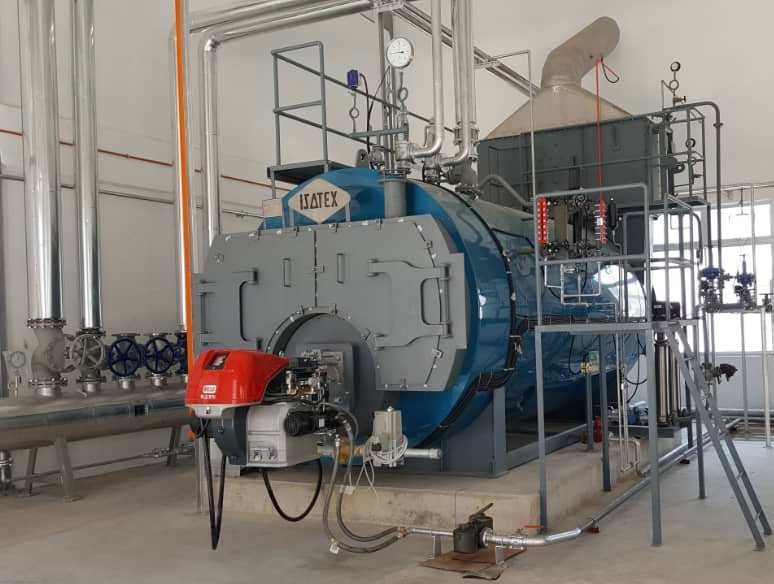
A steam boiler is one of the most process-critical assets on any industrial plant floor, yet many purchase decisions are still made without a clear understanding of how the equipment actually works. That gap often shows up later as mismatched capacity, poor fuel efficiency, or components that fail sooner than expected. Getting the steam boiler working principle fundamentals right up front avoids most of these problems later.
This guide breaks down exactly what a steam boiler is, how it converts fuel into usable steam, the components that make that possible, and the main types available today — so plant engineers and purchase managers can evaluate quotations with confidence.
Whether you are specifying a new boiler or trying to understand why your current one is underperforming, the fundamentals below apply across every industry that depends on steam. If you are comparing quotations from different steam boiler manufacturers in India, these fundamentals will help you evaluate what each one is actually offering.
What is a Steam Boiler?
A steam boiler is a closed pressure vessel that heats water using a fuel source — biomass, coal, oil, or gas — to generate steam at a controlled pressure and temperature. That steam is then used to power industrial processes such as heating, sterilisation, drying, and distillation across industries like food processing, pharmaceuticals, textiles, and chemicals.
How Does a Steam Boiler Work?
1. Fuel Combustion: Fuel is burned in the furnace or combustion chamber to generate heat.
2. Heat Transfer: Hot flue gases pass across or through heat-transfer surfaces, transferring heat to the surrounding water.
3. Steam Generation: Water inside the boiler absorbs this heat and converts to steam, which collects in the steam drum.
4. Pressure Regulation: Steam is regulated through control valves to maintain the working pressure required by the process.
5. Heat Recovery: Flue gases exit through an economiser, which preheats feed water and improves overall thermal efficiency.
6. Distribution: Steam is distributed to the plant through insulated piping at the required pressure and temperature.
Main Components of a Steam Boiler
- Furnace / Combustion Chamber: where fuel burns to release heat.
- Boiler Shell & Tubes: transfer heat from flue gas to water.
- Steam Drum: separates steam from water and stores it under pressure.
- Economiser: preheats feed water using residual flue gas heat, typically improving efficiency by several percentage points.
- Superheater: raises steam temperature above the saturation point, used mainly in power-generation applications.
- Safety Valve: releases pressure automatically if it exceeds safe limits, a critical protection component.
- Water Level Indicator & Low-Water Cutoff: prevents dry firing, one of the most common causes of tube damage.
- Blow-down Valve: Removes sediment from the boiler water and helps maintain water quality.
- Control Panel / Automation System: monitors pressure, temperature, and fuel-firing rate in real time.
Types of Steam Boilers
By Construction
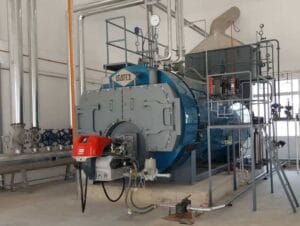
- Fire Tube Boilers: Hot gases pass through tubes surrounded by water; simple, compact, and suited to low-to-medium pressure needs.
- Water Tube Boilers: Water flows through tubes surrounded by hot gases; suited to high pressure and higher capacity requirements.
By Fuel
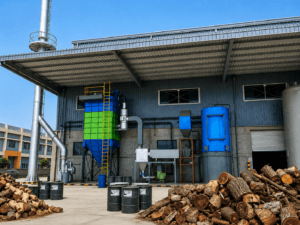
- Biomass-Fired Steam Boilers (agro-waste, rice husk, wood chips)
- Multi-fuel / Solid-fuel Boilers
By Technology
- AFBC (Atmospheric Fluidised Bed Combustion) Boilers — efficient combustion of low-grade or mixed fuels
- Travelling Grate Boilers—continuous solid fuel firing at scale
The Problem: Buyers Often Choose Boiler Type Without Understanding the Trade-offs
It is common for buyers to request a certain steam capacity without specifying construction type, only to receive quotations for fire-tube and water-tube designs that behave very differently under their actual operating pressure. This mismatch surfaces later as pressure limitations, slower steam raising time, or a boiler that cannot be economically upgraded at production scales.
The Solution: Match Construction Type and Fuel to Your Process, Not the Other Way Around
The right approach is to first define your required pressure, capacity, and fuel, and then let those parameters determine construction type—rather than starting with a preferred boiler type and forcing your process to fit it. An experienced steam boiler manufacturing company in India will walk through this sequencing with you before quoting.
Why This Matters: Real Numbers From the Field
As an illustrative example, adding a properly sized economiser to a mid-capacity fire-tube boiler can recover enough waste heat to improve overall thermal efficiency by roughly 3 to 5 percent. On a boiler consuming significant fuel tonnage annually, that efficiency gain alone can offset a meaningful share of yearly fuel spend — often within the first one to two years of operation.
Common Mistakes When Specifying a Steam Boiler
A handful of specification errors account for most of the underperformance seen on site:
- Requesting capacity without pressure. Two boilers rated at the same TPH can require very different construction types depending on working pressure.
- Overlooking tube material grade. Lower-grade tube material can shorten service life significantly in high-cycling operations.
- Ignoring water treatment requirements. Poor feed water quality accelerates scaling and corrosion regardless of how well the boiler itself is built.
- Choosing technology before fuel is finalised. AFBC and traveling grate systems are fuel-specific; finalising technology before fuel can lead to a costly mismatch.
- Skipping automation at the design stage. Retrofitting automation later is more expensive than specifying it upfront.
Industries that Depend on Steam Boilers
Food processing, pharmaceuticals, textiles, chemicals, paper, dairy, distillery, edible oil, and packaging industries all rely on steam boilers as their primary source of process heat, sterilisation, and drying capacity.
Why Choose Isotex Global as Your Steam Boiler Manufacturer?
Understanding how a steam boiler works is the first step. Choosing one of the established steam boiler manufacturers in India who builds to that standard consistently is the second.
50 Years of Steam Boiler Manufacturing Experience
Isotex Global has been designing and manufacturing steam boilers for over 50 years, with in-house manufacturing facilities in Ahmedabad and Dahej, Gujarat. As an IBR-approved, ASME and ISO-certified steam boiler manufacturing company in India, Isotex has delivered installations across 75+ countries and 13+ industry sectors.
Steam Boilers Across Every Construction and Fuel Type
Isotex Global manufactures fire tube, water tube, AFBC, and travelling grate steam boilers from 1 to 40 TPH, engineered for biomass, coal, oil, gas, and multi-fuel operation. Every unit is designed in-house, so component selection is matched to your specific pressure, capacity, and fuel requirement rather than adapted from a generic catalogue model.
Engineering Support From Specification to Commissioning
Isotex Global’s engineering team supports plant teams from initial load calculation through installation and commissioning, helping buyers avoid the common specification mistakes covered in this guide.
Conclusion
A steam boiler’s reliability comes down to how well its construction type, components, and fuel system are matched to your actual process — not just its rated capacity on paper. Understanding these fundamentals puts you in a stronger position when evaluating manufacturers.
Need Help Specifying the Right Steam Boiler?
Share your capacity, pressure, and fuel requirements with the Isotex Global engineering team for a configuration recommendation matched to your process.
Get a Quote: https://isotexglobal.com/contact-us/
Frequently Asked Questions
Q1. What is the main function of a steam boiler?
A steam boiler converts water into steam under controlled pressure using heat from burning fuel, supplying that steam for industrial heating, sterilisation, drying, or power generation processes.
Q2. What is the difference between a fire tube and a water tube boiler?
In a fire tube boiler, hot combustion gases pass through tubes submerged in water. In a water tube boiler, water flows through tubes surrounded by hot gases. Water tube boilers generally handle higher pressures and capacities, while fire tube boilers are simpler and more compact for lower-to-medium requirements.
Q3. Which fuel is best for a steam boiler?
The best fuel depends on local availability and cost. Biomass and coal are common for cost efficiency, while oil and gas are chosen for cleaner combustion and easier automation.
Q4. What safety certifications should a steam boiler have?
In India, steam boilers above a specified capacity and pressure threshold must be IBR certified. For export or multinational operations, ASME ‘S’ Stamp, ISO 9001/14001/45001, and CE marking are also important benchmarks.
Q5. How often does a steam boiler need maintenance?
Routine checks such as water level and blow-down should be done daily to weekly, with major servicing typically scheduled annually, though frequency depends on fuel type, water quality, and operating hours.