Many industrial buyers default to steam when planning a new heating system, without realising that a thermic fluid heater often delivers the same process temperature more safely and with tighter control. The choice matters most in processes that need consistent, high-temperature heat rather than steam itself.
This guide explains exactly what a thermic fluid heater is, how it works, the types available, and where it outperforms a conventional steam boiler—so plant engineers can specify the right heating system the first time.
If your process involves reactors, presses, dryers, or jacketed vessels, understanding this equipment is essential before you request a quotation. This is especially true when comparing quotations from different thermic fluid heater manufacturers, since specifications can look similar on paper but perform very differently in practice.
What is a Thermic Fluid Heater?
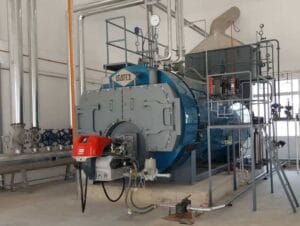
A thermic fluid heater, also called a hot oil heater, is a closed-loop heating system that heats a specially formulated thermic fluid instead of water, and circulates it through a process at high temperature and near-atmospheric pressure. It is widely used in industries that need consistent, high-temperature heat without the high-pressure risks associated with an equivalent-temperature steam system.
How Does a Thermic Fluid Heater Work?
1. Fluid Heating
Thermic fluid, a specially formulated heat-transfer oil, is heated in the heater by a fuel-fired combustion chamber.
2. Circulation
A circulation pump moves the hot fluid through insulated piping to process equipment such as reactors, presses, and dryers.
3. Heat Transfer at Process Point
The fluid transfers heat at the process point and returns to the heater at a lower temperature.
4. Closed-Loop Return
The cycle repeats continuously in a closed loop, with an expansion tank managing fluid volume changes as temperature fluctuates.
Because the system operates near atmospheric pressure even at high temperatures of 300 degrees Celsius and above, it avoids the high-pressure risks of an equivalent-temperature steam system.
Types of Thermic Fluid Heaters
By Construction
- Coil Type Thermic Fluid Heaters: Fluid flows through helical coils exposed to combustion heat; compact and widely used.
- Fire Tube Type Thermic Fluid Heaters: Hot gases pass through tubes submerged in circulating fluid.
By Fuel
- Coal Fired
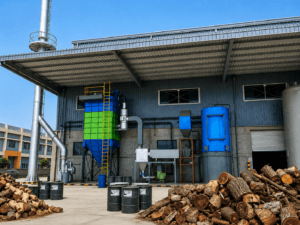
- Biomass Fired
- Oil Fired
- Gas Fired
- Multi-Fuel Thermic Fluid Heaters
The Problem: Steam is Often the Default Choice Even When It Is Not the Best Fit
Because steam boilers are more familiar, many plants specify steam systems for processes that actually need indirect, uniform heat rather than steam itself. This leads to higher operating pressure than necessary, less precise temperature control, and higher long-term maintenance on pressure-rated components.
The Solution: Match the Heating Method to the Process, Not the Habit
Where a process needs a controlled, uniform temperature at a reactor, press, or jacketed vessel rather than direct steam contact, a thermic fluid heater typically delivers better temperature control at lower pressure and with lower long-term maintenance than an equivalent steam system.
Thermic Fluid Heater vs. Steam Boiler
- Operating Pressure: Thermic fluid heaters run near atmospheric pressure; steam boilers run at high pressure to achieve equivalent temperatures.
- Temperature Uniformity: Thermic fluid systems offer more uniform, closely controlled process temperatures.
- Safety: Lower pressure operation reduces risk and simplifies statutory compliance.
- Application Fit: Steam suits processes needing steam directly, such as sterilisation or humidification; thermic fluid suits indirect heating processes such as reactors, presses, dryers, and jacketed vessels.
Why This Matters: Real Numbers From the Field
As an illustrative example, a process running at 200 degrees Celsius on a thermic fluid system typically operates at near-atmospheric pressure, compared to over 15 bar for an equivalent-temperature steam system. That pressure difference translates directly into simpler statutory compliance, lower-grade piping requirements in parts of the circuit, and reduced long-term maintenance on pressure components.
Common Mistakes When Specifying a Thermic Fluid Heater
These specification errors are the most common causes of underperformance and premature fluid degradation:
- Defaulting to steam out of habit. Many indirect heating processes are better served by thermic fluid, even when steam is the more familiar choice internally.
- Underestimating thermic fluid grade selection. Fluid grade must match your operating temperature range; the wrong grade degrades faster and reduces heater life.
- Ignoring expansion tank sizing. An undersized expansion system leads to fluid overflow or air ingress during temperature cycling.
- Skipping fluid quality monitoring plans. Thermic fluid degrades over time and needs periodic testing; skipping this shortens both fluid and equipment life.
- Not confirming multi-point heating capacity. If multiple process points will draw heat simultaneously, heater sizing must account for combined peak demand, not just the largest single user.
Industrial Applications of Thermic Fluid Heaters
Chemical and pharmaceutical reactors and process vessels; edible oil refining and extraction, textile processing such as stenters and dyeing, plywood and particle board hot pressing, rubber and plastic processing; and food processing operations such as frying and drying all commonly rely on thermic fluid heaters for consistent process heat.
Why Choose Isotex Global as Your Thermic Fluid Heater Manufacturer?
Specifying the right thermic fluid heater depends on getting fluid grade, circulation design, and multi-point sizing right from the start. This is where working with an experienced thermic fluid heater company in India makes the biggest difference.
Five Decades of Thermal Engineering Experience
Isotex Global has been designing and manufacturing thermic fluid heaters for over 50 years, with in-house manufacturing facilities in Ahmedabad and Dahej, Gujarat, and installations across 75+ countries and 13+ industry sectors.
IBR-Compliant Heaters Across Every Major Fuel Type
As an established thermic fluid heater manufacturer in India, Isotex Global builds coil type and fire tube type thermic fluid heaters in coal-fired, biomass-fired, oil-fired, gas-fired, and multi-fuel configurations, engineered around your process temperature and simultaneous heat demand. Few thermic fluid heater manufacturers in India offer this range of fuel flexibility from a single in-house design team.
Engineering Support for Multi-Point Process Heating
Isotex Global’s engineering team helps plants calculate combined peak demand across multiple process points before recommending heater capacity, avoiding the undersizing mistakes common in this category.
Conclusion
Thermic fluid heaters offer industries a safer, more precise way to deliver high-temperature process heat compared to high-pressure steam. Understanding how they work and where they outperform a steam boiler helps plant engineers make the right process-heating decision the first time.
Need Help Sizing a Thermic Fluid Heater for Your Process?
Share your required process temperature and simultaneous heat demand with the Isotex Global engineering team for a configuration recommendation.
Get a Quote: https://isotexglobal.com/contact-us/
Frequently Asked Questions
Q1. What is a thermic fluid heater used for?
Thermic fluid heaters are used to supply high, uniform process heat, typically to reactors, presses, dryers, and jacketed vessels, in industries like chemicals, pharmaceuticals, edible oil, textiles, and plywood manufacturing. A specialised thermic fluid heater company in India can help identify which of these applications fits your process.
Q2. What is the difference between a thermic fluid heater and a steam boiler?
A thermic fluid heater circulates heated thermal oil in a closed loop at near-atmospheric pressure, while a steam boiler generates pressurised steam from water. Thermic fluid systems offer safer high-temperature operation, while steam suits processes that require steam directly.
Q3. What temperature can a thermic fluid heater achieve?
Thermic fluid heaters typically operate in the range of 150 to over 300 degrees Celsius, depending on the thermic fluid grade and heater design, while maintaining near-atmospheric pressure.
Q4. Which industries use thermic fluid heaters the most?
Chemical, pharmaceutical, edible oil, textile, rubber, plastic, and plywood or panel industries are among the largest users of thermic fluid heaters for indirect process heating.
Q5. What fuel options are available for thermic fluid heaters?
Thermic fluid heaters are available in coal-fired, biomass-fired, oil-fired, gas-fired, and multi-fuel configurations, chosen based on regional fuel cost and availability.